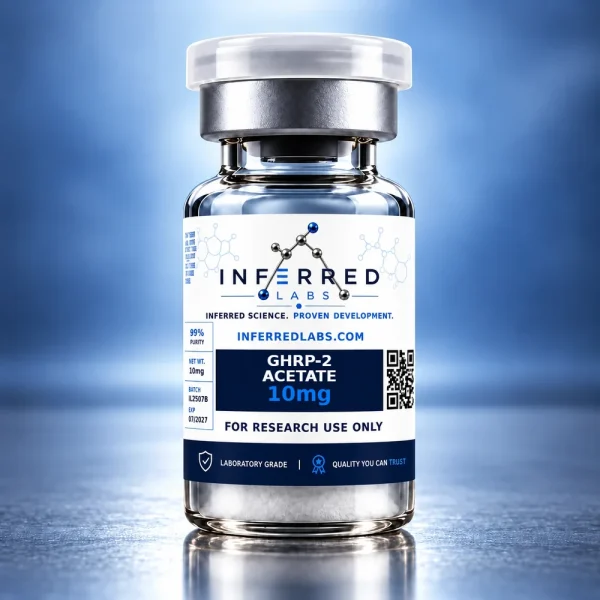

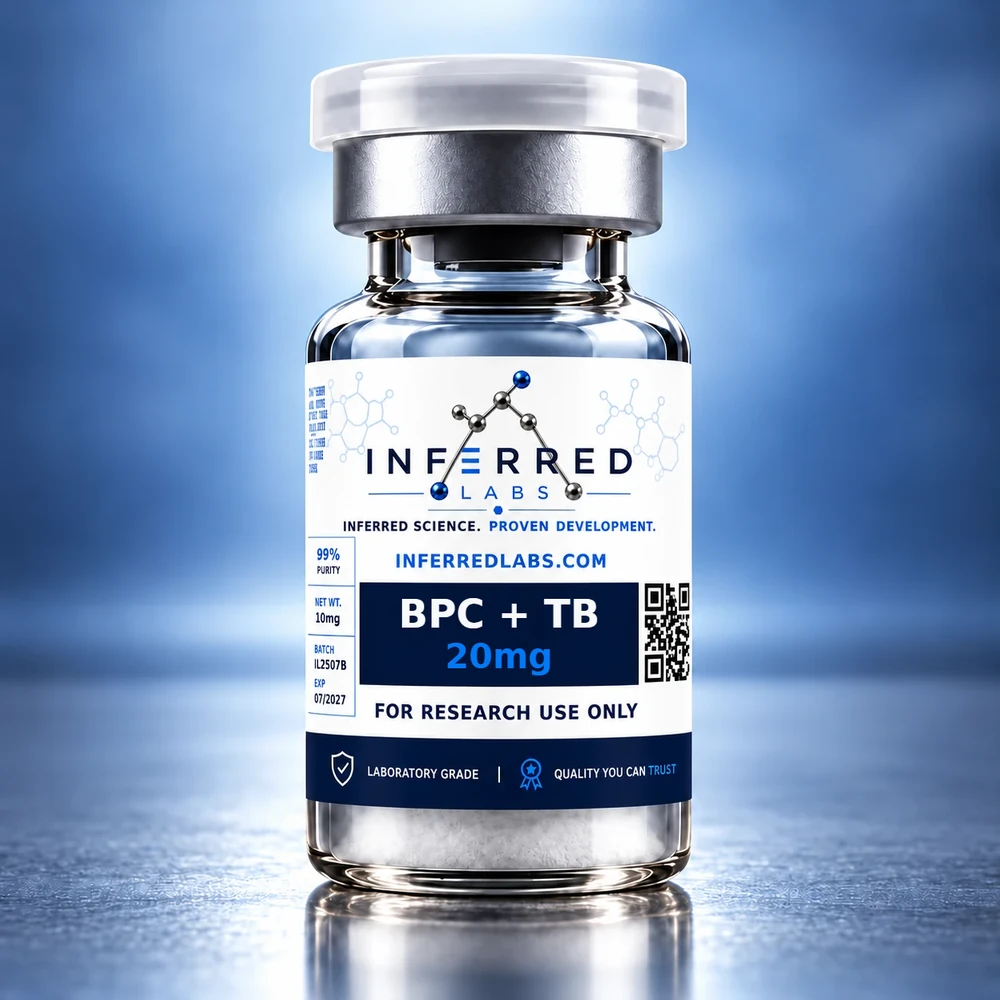
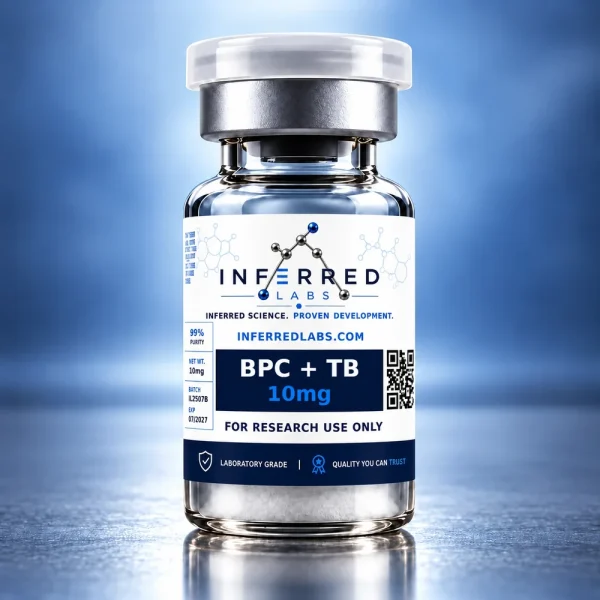
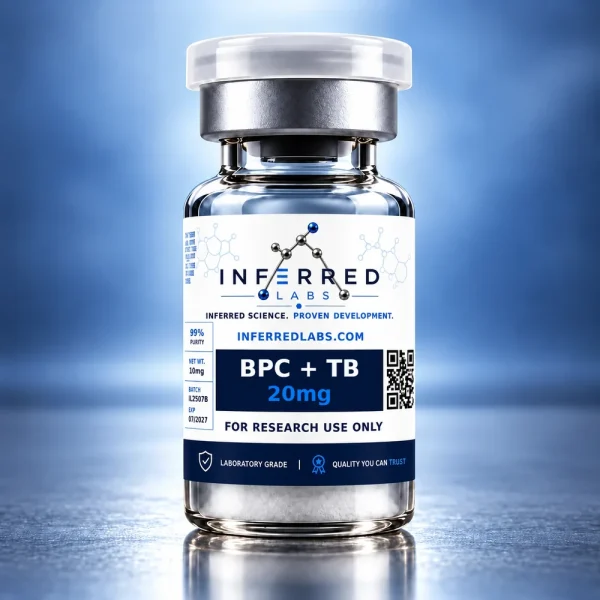
BPC-157 + TB500
Price range: $45.00 through $70.00
BPC-157 + TB500 is a blend of BPC-157 and TB500, co-lyophilized in one vial for in-vitro laboratory research. Every component is listed with its quantity.
- Supplied as a lyophilized powder, 10mg or 20mg per vial
- Every component and its quantity stated on the label
- Lot-matched COA with RP-HPLC purity and LC-MS identity
- Independent testing Third-party lab, every lot
- Lot-matched COA Scan the vial to verify
- Same-day dispatch Tracked, before cut-off
- Secure packaging Sealed, tracked parcel
Certificate of Analysis
Verified- Lot
- 26-30205
- Purity
- 99.88%
- Tested
- 16 Sep 2026
1 previous lot
26-2020499.22%What is BPC-157 + TB500?
BPC-157 + TB500 is a peptide blend for laboratory research. We co-lyophilize BPC-157 and TB500 in a single vial and supply it as a dry powder. Each vial contains BPC-157 and TB500 in equal amounts: 5mg + 5mg in the 10mg vial, 10mg + 10mg in the 20mg vial.
BPC-157 + TB500 composition
Each component is a separate compound with its own identity data. For that reason, we describe BPC-157 + TB500 by what it contains, not by any combined effect. You will find the identity data for every component in the Specification tab. In addition, the certificate of analysis for each lot reports results for each component.
For reference data on one component, see the PubChem record for BPC-157.
Where this material appears in the literature
The research literature describes each component on its own, not the blend. However, Inferred Labs supplies the blend for in vitro laboratory investigation only. We make no claim about what it does in any living subject.
Related material in the catalog
Inferred Labs lists BPC-157 + TB500 under peptide blends. Where available, we also list the individual components on their own.
BPC-157 + TB500 analysis and certification
Before we release any lot, an independent laboratory analyzes it. The lab uses RP-HPLC to measure purity and LC-MS to confirm identity. We then publish the certificate of analysis against the lot number, not the product page. As a result, the document you read is the document for the vial you receive. The lot number on the vial label links the two, and you can look it up in our COA library.
Purity and the certificate of analysis
We do not quote one purity figure for the whole catalog. Instead, each certificate of analysis states the measured RP-HPLC result for that lot. The certificate is therefore the record that applies to your material. Analytical figures relate only to the lot they cover. They also carry no implication of suitability for any purpose beyond laboratory research.
Research use only
Inferred Labs supplies this material for laboratory research only. We do not supply it for any use in humans or animals. It is not a drug, dietary supplement, food or cosmetic. Nothing on this page describes or implies any such use. In addition, we only sell to persons aged 21 or over. Each buyer must be a qualified researcher or buy for a research institution, laboratory or business.
| Weight | 0.0353 lbs |
|---|---|
| Vial Size | 10mg, 20mg |
| Product | BPC-157 + TB500 |
|---|---|
| Class | Peptide blend, co-lyophilized |
| Components | BPC-157, TB500 |
| BPC-157 | 15 aa, C62H98N16O22, 1419.54 Da, CAS 137525-51-0 |
| TB500 | 43 aa, C212H350N56O78S, 4963.44 Da, CAS 77591-33-4 |
| Appearance | White to off white lyophilized powder |
| Purity | Measured per lot, stated on the certificate of analysis |
| Purity method | RP-HPLC |
| Identity method | LC-MS |
| Solubility | Soluble in sterile water and aqueous buffers for analytical preparation |
| Labeled quantity | 10mg total per vial or 20mg total per vial |
Characterization. Values above describe each component as supplied. The figures for the lot you receive, including measured purity, are stated on its certificate of analysis.
How this material is tested
Two separate analyses are carried out on every lot before release, and both appear on the certificate.
- RP-HPLC, for purity. Reversed phase high performance liquid chromatography separates the material by hydrophobicity. The main peak is integrated against total peak area, and that ratio is the purity figure reported on the certificate.
- LC-MS, for identity. Liquid chromatography coupled to mass spectrometry confirms that the mass of the main peak matches the expected mass for the compound, which is what distinguishes the correct sequence from a closely related one.
A complete certificate carries the compound name, the lot number, the test date, the method, the measured purity and the name of the laboratory. If any of those is missing, or the lot number on the vial does not match the certificate, contact us before using the material.
Storing BPC-157 + TB500
Lyophilized material is shipped cold and should be moved into freezer storage on arrival. Store the sealed vial dry at −20°C or below, protected from light and moisture. Returned promptly to those conditions, the dry solid is the most stable form this material takes.
Preparing stock solutions
Prepare stock solutions in sterile water or an appropriate aqueous buffer at a concentration suited to your assay, expressed in mg/mL. Allow the vial to reach room temperature before opening, add solvent down the vial wall rather than directly onto the solid, and let the material dissolve without vigorous agitation. Blends dissolve readily in water at the concentrations used for analytical work.
Solutions are less stable than the lyophilized solid. Prepare close to the point of use, hold at 2 to 8°C for short periods only, and aliquot before freezing so that repeated freeze and thaw cycles are avoided.
On arrival
Check that the vial is intact and sealed, that the compound name and labeled quantity match your order, and that the lot number on the label matches the certificate published for it. If anything does not match, or the packaging has clearly failed in transit, contact us before using the material. Problems visible on arrival should be reported within 7 days so that a carrier claim remains possible.
Handling and disposal
Assess the hazards of this material before handling it and use appropriate controls and protective equipment. It has not been characterized toxicologically and should be treated as potentially hazardous. Anyone handling it should be trained for the work.
Dispose of unused material, vials and packaging lawfully and in line with your institution's waste procedures.
Record keeping
Record the lot number in your notes at the point of first use, alongside the date the vial was opened and the concentration of any stock prepared. Certificates are published against the lot number rather than the product, so the lot number is the only reliable link between your results and the analytical data for the material that produced them. If a question arises about a result months later, that link is what keeps the work auditable.
How is purity reported for each BPC-157 + TB500 lot?
Every lot is analyzed by RP-HPLC peak area. The measured purity for your lot is stated on its certificate of analysis, which is the record that applies to the vial you receive.
How do I find the certificate of analysis for my vial?
Each vial label carries a lot number and a QR code. Scan the code, or enter the lot number in the COA Library, to open the certificate for that lot.
How is BPC-157 + TB500 shipped and stored?
BPC-157 + TB500 is supplied as a lyophilized powder in a sealed glass vial and shipped cold. Move it into freezer storage at −20°C or below on arrival, protected from light and moisture. Full guidance is in the Storage and handling tab.
What does each BPC-157 + TB500 vial contain?
Each vial contains BPC-157 and TB500 in equal amounts: 5mg + 5mg in the 10mg vial, 10mg + 10mg in the 20mg vial. One certificate of analysis covers the full lot.
Is BPC-157 + TB500 for human or veterinary use?
No. It is sold strictly for in-vitro laboratory research. It is not a drug, food, cosmetic or dietary supplement. No usage guidance is provided. Sale is restricted to qualified researchers aged 21 and over.
Looking for something else?
Tell us the compound and quantity you need and we will confirm stock and lead time. Research use only.
Contact us